Showing posts with label Great Albums. Show all posts

September 26, 2005

Great Albums # Tonight's the Night : Neil Young


Written and recorded in 1973 shortly after the death of roadie Bruce Berry, Neil Young's second close associate to die of a heroin overdose in six months (the first was Crazy Horse guitarist Danny Whitten), Tonight's the Night was Young's musical expression of grief, combined with his rejection of the stardom he had achieved in the late '60s and early '70s.

The title track, performed twice, was a direct narrative about Berry: "Bruce Berry was a working man/He used to load that Econoline van." Whitten was heard singing "Come On Baby Let's Go Downtown," a live track recorded years earlier. Elsewhere, Young frequently referred to drug use and used phrases that might have described his friends, such as the chorus of "Tired Eyes," "He tried to do his best, but he could not."

Performing with the remains of Crazy Horse, bassist Billy Talbot and drummer Ralph Molina, along with Nils Lofgren (guitar and piano) and Ben Keith (steel guitar), Young performed in the ragged manner familiar from Time Fades Away -- his voice was often hoarse and he strained to reach high notes, while the playing was loose, with mistakes and shifting tempos. But the style worked perfectly for the material, emphasizing the emotional tone of Young's mourning and contrasting with the polished sound of CSNY and Harvest that Young also disparaged.

He remained unimpressed with his commercial success, noting in "World on a String," "The world on a string/Doesn't mean anything." In "Roll Another Number," he said he was "a million miles away/From that helicopter day" when he and CSN had played Woodstock. And in "Albuquerque," he said he had been "starvin' to be alone/Independent from the scene that I've known" and spoke of his desire to "find somewhere where they don't care who I am." Songs like "Speakin' Out" and "New Mama" seemed to find some hope in family life, but Tonight's the Night did not offer solutions to the personal and professional problems it posed.

It was the work of a man trying to turn his torment into art and doing so unflinchingly. Depending on which story you believe, Reprise Records rejected it or Young withdrew it from its scheduled release at the start of 1974 after touring with the material in the U.S. and Europe. In 1975, after a massive CSNY tour, Young at the last minute dumped a newly recorded album and finally put Tonight's the Night out instead. Though it did not become one of his bigger commercial successes, the album immediately was recognized as a unique masterpiece by critics, and it has continued to be ranked as one of the greatest rock & roll albums ever made.

September 23, 2005

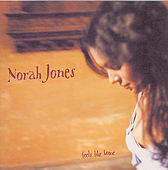
Great Albums # Feels like Home : Norah Jones


In two short years, Norah Jones went from playing clubs as an unknown to becoming a ubiquitous, insanely heralded new artist and the prime torch carrier for "grown-folks' music." Most of the praise was for Jones' voice: You put on her 8 million-selling, eight-Grammy-winning 2001 debut, Come Away With Me, to be transported by that tousled half-whisper and by the twenty-four-year-old's affectation-free Texas-saloon-chanteuse vibe. The surrounding musical embellishments might as well have been ring tones.

But singing doesn't just happen: It needs context, and this could be Jones' particular genius; she is as much a piano player as a singer, despite her best efforts to hide this fact -- in performance she slinks behind the piano and does her thing with undivalike anonymity. Far from blanded-out background music, Feels Like Home, Jones' second album, is a triumph of the low-key, at once easygoing and poignant.

Jones, her bandmates and producer Arif Mardin take what might seem like unexceptional acoustic-lounge arrangements and turn them into high drama. The gorgeous "Those Sweet Words," one of several songs Jones co-wrote with her boyfriend and bassist, Lee Alexander, is a good example. It begins as an ordinary singer-songwriter tangle of acoustic guitars, ambling along in the medium-slow tempo that became, from overuse, her Achilles' heel. Jones enters by pawing delicately at a single note, then plays idle throwaway chords that exude a round, almost liquid tone you rarely hear from a piano. They're just random jazz-piano jottings, yet from them Jones creates the outline of a sullen, disconsolate scene. The hard work of framing a narrative backdrop is done. All that remains is for Jones to heave that heavy sigh and fill in the details.

Feels Like Home is a series of these carefully drawn mood states, each one set in a slightly different shade of blue and differentiated by subtle changes in the arrangements. Though the originals, written mostly by members of her touring band, lack some of the earnest grabbiness of the songs Jesse Harris wrote for Jones' first foray, they're far more varied musically, and they depend on Jones' magic, her ability to invest the most fragile melody with some preternatural impact. There are moments of lithe, coolheaded boho blues ("In the Morning," featuring a coy Jones solo on Wurlitzer electric piano) and downcast salvation-seeking waltzes (the transfixing "Humble Me"). There's a credible excursion into country two-step (the duet with Dolly Parton, "Creepin' In") and a haunted Brechtian tone poem called "Carnival Town."

Jones talks about her whirlwind success just a little, with her usual understatement: On the idyllic "Toes," she sings of an idealized, unharried life not in the strident complaining voice of a newly minted star but like any other overwhelmed soul yearning for a moment's peace.The most heartening thing about Feels Like Home is the utter absence of fussiness, or second-album overthink. It extends the Come Away With Me template while never echoing the earlier songs. Where most creators of vocal pop music concentrate on crafting tight couplets and big-payoff refrains, Jones just sits at the piano and chases less obvious targets -- ruminative moods and hushed-whisper atmospheres. And she's found, in two graceful albums, a whole different kind of mojo lurking inside the three-minute song.

Review from RS Mag

August 21, 2005

Great Albums # Shoot Out The Lights : Richard & Linda Thompson

Richard & Linda Thompson's marriage was crumbling as they were recording Shoot Out the Lights in 1982, and many critics have read the album as a chronicle of the couple's divorce. In truth, most of the album's songs had been written two years earlier (when the Thompsons were getting along fine) for an abandoned project produced by Gerry Rafferty, and tales of busted relationships and domestic discord were always prominent in their songbook.

But there is a palpable tension to Shoot Out The Lights which gives songs like "Don't Renege On Our Love" and "Did She Jump Or Was She Pushed" an edgy bite different from the Thompsons' other albums together; there's a subtle, unmistakable undertow of anger and dread in this music that cuts straight down to the bone.

Joe Boyd's clean, uncluttered production was the ideal match for these songs and their Spartan arrangements, and Richard Thompson's wiry guitar work was remarkable, displaying a blazing technical skill that never interfered with his melodic sensibilities. Individually, all eight of the album's songs are striking (especially the sonic fireworks of the title cut, the beautiful drift of "Just The Motion," and the bitter reminiscence of "Did She Jump Or Was She Pushed"), and as a whole they were far more than the sum of their parts, a meditation on love and loss in which beauty, passion, and heady joy can still be found in defeat.

It's ironic that Richard & Linda Thompson enjoyed their breakthrough in the United States with the album that ended their career together, but Shoot Out The Lights found them rallying their strengths to the bitter end; it's often been cited as Richard Thompson's greatest work, and it's difficult for anyone to argue the point.

The Title Track :"Shoot Out the Lights"
Written as a reaction to the Russians' 1979 invasion of Afghanistan, "Shoot Out the Lights" was the title track of Richard and Linda Thompson's brilliant 1982 swan song. From the opening two chords, you can feel the disquieting tension that will haunt the next five-plus minutes. Though the song was originally inspired by the conflict in Afghanistan, it transformed into a menacing, cinematic character study of a murderer who stalks the nighttime city streets. Over his brooding, tremolo-affected guitar and Dave Mattacks' deliberate, martial drumming, Richard fires out image after ominous image, and like the protagonist in the song, never reveals too much. As dark and unsettling as the lyrical content, it's Richard's riveting guitar that pushes the song to the edge. His pair of solos are as gripping and fierce as one could expect, bending and shredding notes into shards of metal and threatening to lose control at any moment. It's hard to imagine anyone covering "Shoot Out the Lights" with the same impact as Richard ( Linda does not appear on this track). The song, as well as the performance and album, remains one of the crowning achievements in Richard Thompson's career.

Review by Brett Hartenbach Taken from All Music Group

For More stuff on Richard Thompson
Check out Beesweb : www.richardthompson-music.com

August 14, 2005

Great Albums # Aja : Steely Dan

Forget for a moment the album's surreal sonic perfection, its melodic and harmonic complexity - music so technically demanding its creators had to call in A-list session players to realize the sounds they heard in their heads but could not play, even on the instruments they had mastered. Concentrate instead on the profound sadness of Steely Dan's exquisitely arranged Aja.

Rock has always excelled at embodying adolescent ache. But it's rare when rock captures the complications of adult sorrows almost purely with its sound. Drummer Paul Humphrey's upstroke during the beginning of "Black Cow," the 1977 album's languid opener, is so hesitant, so world-weary that it barely catches up to the pulse he sets with his foot.

On the eight-minute title track, instruments layer onto a different drummer, adding chord on top of chord, harmony on top of harmony, until tom-toms and cymbals thunder, raging all that ornate aural architecture away.

Aja's extended tracks achieve their power through a dynamic dance: Mellow, stark passages (which drew a blueprint for "smooth jazz" radio) are offset by obsessively dense musicianship, stacks of notes that grasp at euphoria. Some of the era's hottest jazz instrumentalists - Joe Sample, Larry Carlton, Lee Ritenour, Tom Scott - soar through what's often on the surface utterly jubilant. "Peg," the album's biggest hit, is nearly disco, and "I Got the News" isn't far away.

The closing cut, "Josie," almost plays the celebration straight, though its backward-looking R&B keeps getting tripped up by restless rhythms. But there are so many unresolved chords, so much sweet dissonance, that the album's sleek virtuosity collapses against itself, leaving behind a loneliness rendered mostly oblique by Donald Fagen's heady wordplay. On "Deacon Blues," he cuts through his own cleverness to paint a picture of noir-shaded simplicity: "Drink Scotch whiskey all night long and die behind the wheel."

That's Aja: frustration and failure at the heart of the party.

Review by BARRY WALTERS from RS

August 03, 2005

Great Albums # Automatic For the People : REM


Turning away from the sweet pop of Out of Time, R.E.M. created a haunting, melancholy masterpiece with Automatic for the People. At its core, the album is a collection of folk songs about aging, death, and loss, but the music has a grand, epic sweep provided by layers of lush strings, interweaving acoustic instruments, and shimmering keyboards.

Automatic for the People captures the group at a crossroads, as they moved from cult heroes to elder statesmen, and the album is a graceful transition into their new status. It is a reflective album, with frank discussions on mortality, but it is not a despairing record -- "Nightswimming," "Everybody Hurts," and "Sweetness Follows" have a comforting melancholy, while "Find the River" provides a positive sense of closure.

R.E.M. have never been as emotionally direct as they are on Automatic for the People, nor have they ever created music quite as rich and timeless, and while the record is not an easy listen, it is the most rewarding record in their oeuvre.

August 02, 2005

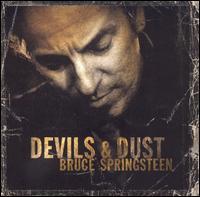
Great Albums # Devils& Dust : B Springsteen

Every decade or so, Bruce Springsteen releases a somber album of narrative songs, character sketches, and folk tunes -- records that play not like rock & roll, but rather as a collection of short stories. Nebraska, released in the fall of 1982 during the rise of Reagan's America, was the first of these, with the brooding The Ghost of Tom Joad following in 1995, in the thick of the Clinton administration but before the heady boom days of the late '90s.

At the midpoint of George W. Bush's administration, Springsteen released Devils & Dust, another collection of story songs that would seem on the surface to be a companion to Nebraska and Ghost, but in actuality is quite a different record than either.


While the characters that roam through Devils & Dust are similarly heartbroken, desperate, and downtrodden, they're far removed from the criminals and renegades of Nebraska, and the album doesn't have the political immediacy of Ghost's latter-day Woody Guthrie-styled tales -- themes that tied together those two albums.


Here, the songs and stories are loosely connected. Several are set in the West, some are despairing, some have signs of hope, a couple are even sweet and light. Springsteen's writing is similarly varied, occasionally hearkening back to the spare, dusty prose of Nebraska, but often it's densely composed, assured, and evocative, written as if the songs were meant to be read aloud, not sung.

But the key to Devils & Dust, and why it's his strongest record in a long time, is that the music is as vivid and varied as the words. Unlike the meditative, monochromatic The Ghost of Tom Joad, this has different shades of color, so somber epics like "The Hitter" or the sad, lonely "Reno" are balanced by the lighter "Long Time Comin'," "Maria's Bed," and "All I'm Thinkin' About," while the moodier "Black Cowboys" and "Devils & Dust" are enhanced by subtly cinematic productions.

It results in a record that's far removed in feel from the stark, haunting Nebraska, but on a song-for-song level, it's nearly as strong, since its stories linger in the imagination as long as the ones from that 1982 masterpiece (and they stick around longer than those from Ghost, as well). Devils & Dust is also concise and precisely constructed, two things the otherwise excellent 2002 comeback The Rising was not, and that sharp focus helps make this the leanest, artiest, and simply best Springsteen record in many years.


Review from AMG

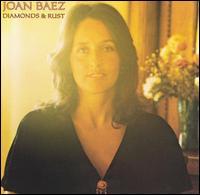
Great Albums # Diamonds and Rust : Joan Baez


With the Vietnam War winding down, Joan Baez, who had devoted one side of her last album to her trip to Hanoi, delivered the kind of commercial album A&M Records must have wanted when it signed her three years earlier.

But she did it on her own terms, putting together a session band of contemporary jazz veterans like Larry Carlton, Wilton Felder, and Joe Sample, and mixing a wise selection from the work of current singer-songwriters like Jackson Browne and John Prine with pop covers of Stevie Wonder and the Allman Brothers Band, and an unusually high complement of her own writing.

A&M, no doubt recalling the success of her cover of the Band's "The Night They Drove Old Dixie Down," released her version of the Allmans' "Blue Sky" as a single, and it got halfway up the charts. But the real hit was the title track, a self-penned masterpiece on the singer's favorite subject, her relationship with Bob Dylan.

Outdoing the current crop of confessional singer/songwriters at soul baring, Baez sang to Dylan, reminiscing about her '60s love affair with him intensely, affectionately, and unsentimentally. It was her finest moment as a songwriter and one of her finest performances, period, and when A&M finally released it on 45, it made the Top 40, propelling the album to gold status.

But those who bought the disc for "Diamonds & Rust" also got to hear "Winds of the Old Days," in which Baez forgave Dylan for abandoning the protest movement, as well as the jazzy "Children and All That Jazz," a delightful song about motherhood, and the wordless vocals of "Dida," a duet with Joni Mitchell accompanied by Mitchell's backup band, Tom Scott and the L.A. Express. The cover songs were typically accomplished, making this the strongest album of Baez's post-folk career.

"Our breath comes out white clouds
Mingles and hangs in the air

Speaking strictly for me
We both could have died then and there
Now you're telling me You're not nostalgic
Then give me another word for it
You who are so good with words
And at keeping things vague
Because I need some of that vagueness now
It's all come back too clearly
Yes I loved you dearly
And if you're offering me diamonds and rust I've already paid"

Great Albums # Astral Weeks : Van Morrison


Astral Weeks was one of Van Morrison's first solo albums after he quit Them and it still stands as a great anomaly in his back catalogue. It's a staggering work, filled with a great, compassionate sorrow for the world that's cut with an ecstatic mysticism.

His lyrics are visionary and deeply sensual, garbled passages of word-sounds that convey more via their movement and phrasing than any straight reading ever could. His band are phenomenal, although rumours still persist that - due to the fact that Morrison couldn't be in the same room with any of them - they all overdubbed their parts later, the core of the songs being Morrison's solo guitar and vocal track. Either way, the arrangements are glorious.

There's a lightness of touch and a melodic freedom that's fairly jazzy, especially in guitarist Jay Berliner's quicksilver leads, an echo of his work with Mingus on The Black Saint and The Sinner Lady. The vibes, flute and soprano saxophone give the tracks an organic quality as they expand and contract like breath. The title track is a hallucinatory regression, via aerial views of heavy industry, visitations from dead bluesmen and resurrection through love, with Richard Davis' acoustic bass plotting little yelps of joy throughout. Still, Sweet Thing is the stand-out, with Morrison surrendered to love and vowing never to grow so old again. He was 23.

Review from AMG